Carmilla
Twenty-five years before Dracula, a vampire walks into a girl's life by being invited in.
What happens
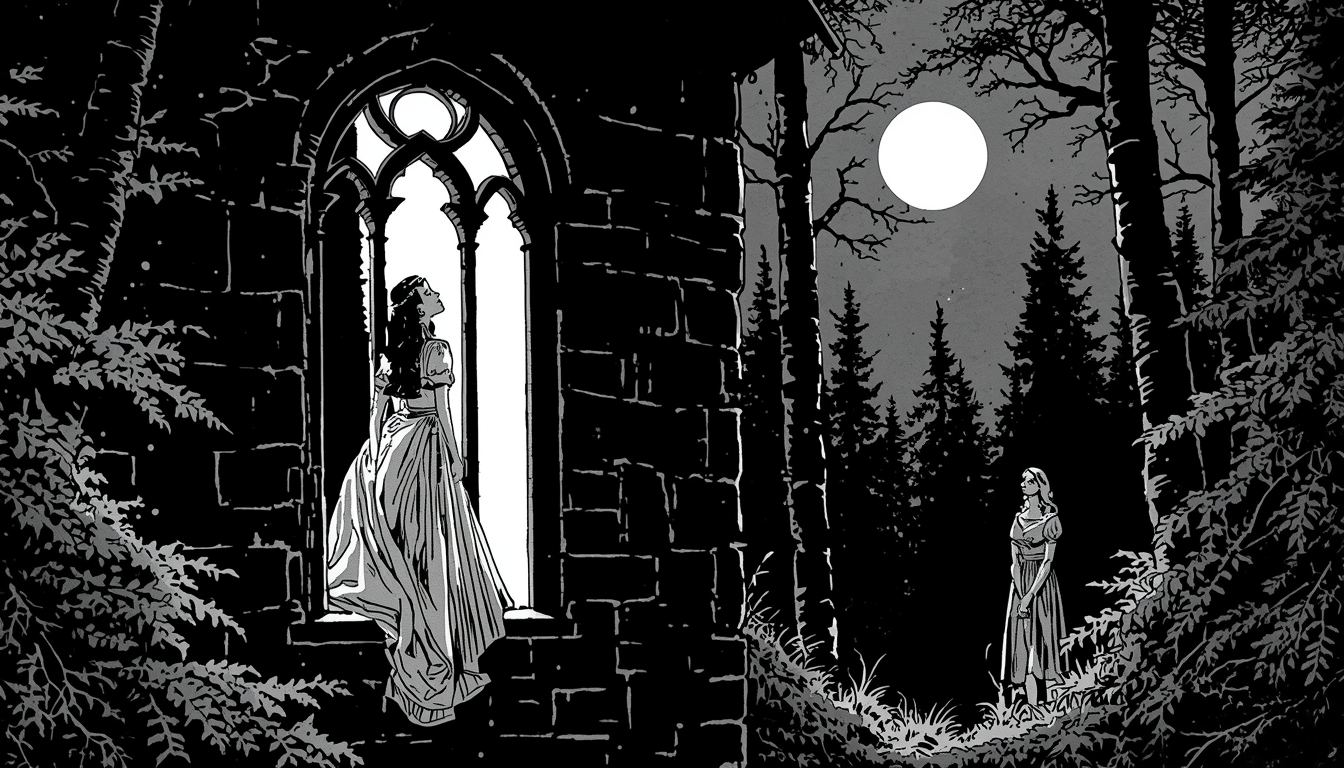
Laura narrates. "In Styria, we, though by no means magnificent people, inhabit a castle, or schloss." She is nineteen when a carriage crashes near the house and a young woman, Carmilla, is left in the family's care. The two become inseparable. Laura starts to waste away, with nightmares of a presence at the foot of her bed.
A family friend, General Spielsdorf, describes his own niece dying the same way after meeting a young woman who matches Carmilla. The truth comes out: Carmilla is Mircalla, Countess Karnstein, long dead, and she is tracked to her tomb and destroyed.
Read the full text on Wikisource. First published 1871-72, collected in In a Glass Darkly (1872).
Why it frightens
Dracula is a stranger. Carmilla is a friend. She arrives wounded, is welcomed, becomes a confidante, and the harm is done in the room where Laura feels most loved. Laura never wholly wants her gone, even as she weakens. That mix of attraction and dread is the horror.
It is also a pattern from our criminology files: danger gains access through trust. Our essay on who actually hurts people covers the data. The story put the pattern in a drawing room in 1871.
On screen
- Vampyr (1932): Carl Dreyer's dreamlike film, based on elements of Le Fanu's In a Glass Darkly.
- The Vampire Lovers (1970): Hammer's adaptation of the novella, directed by Roy Ward Baker.
- Best vampire movies: the long line that starts here.