Casting the Runes
A man who was insulted does not shout. He hands you a slip of paper and waits three months.
What happens
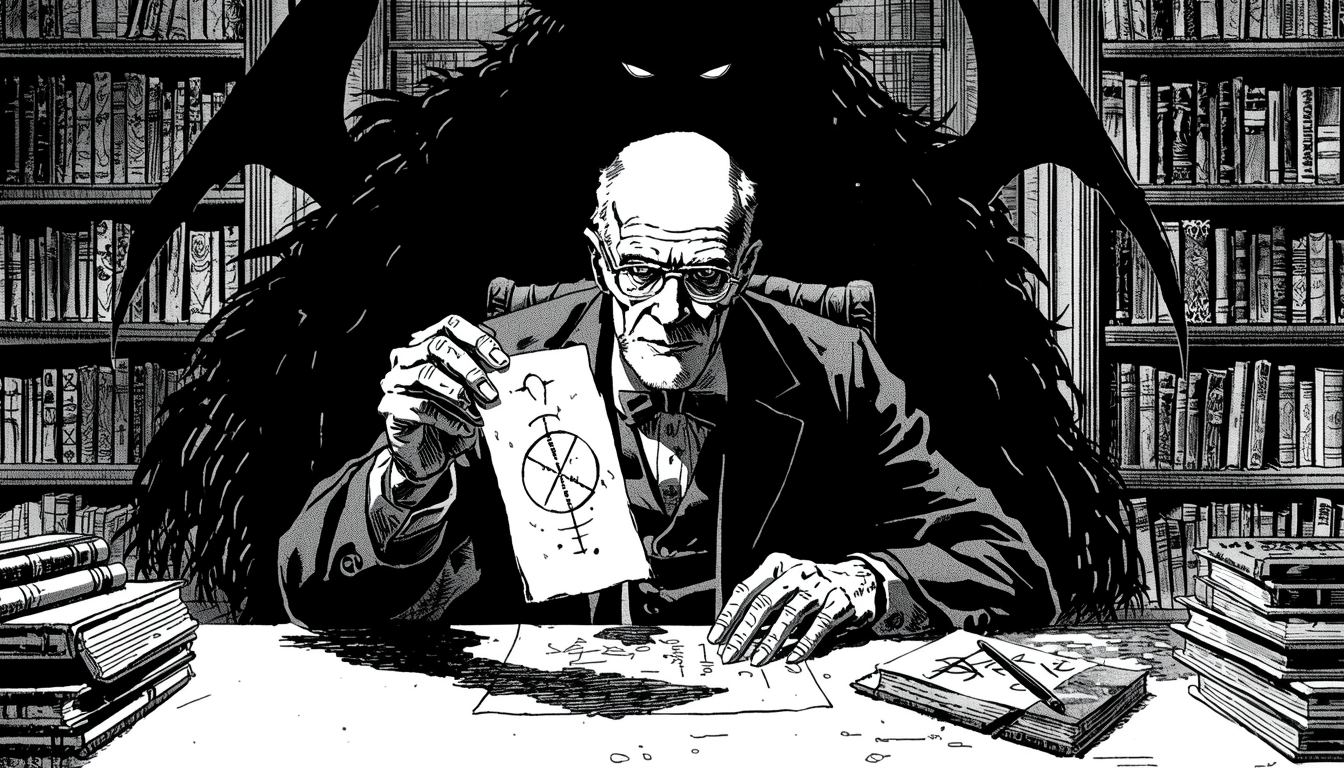
Mr Karswell, a wealthy man and an alchemist, submits a paper, The Truth of Alchemy, to a learned association. It is rejected, and he writes demanding to know who read it. Others who crossed him have died, three months after receiving a slip of paper marked with runes. John Harrington was one.
Edward Dunning, who had a hand in that rejection, is next. John Harrington's brother Henry helps him work out the pattern: the slip must pass back to its sender, unseen, before the three months expire. They manage it. Karswell dies at Abbeville, struck by a stone falling from a church scaffold, "there being, as was clearly proved, no workman on the scaffold at that moment".
Read the full text on Wikisource. James published it in More Ghost Stories of an Antiquary (1911).
Why it frightens
The curse is a parcel. It comes in the post of daily life, a paper handed over politely, a ticket case, a library desk. James writes it as scholarly gossip, the tone of colleagues at tea, and that dryness makes the countdown worse.
A deadline is its own horror. The story never says Dunning's fear is the weapon, but it lets you wonder. Either way, the dread builds before anything supernatural happens.
On screen
- Night of the Demon (1957): adapted from the story and released in the US as Curse of the Demon. The film shows the demon on screen.