Urban legends: the hook, the hitchhiker and the call from upstairs
Nobody wrote them. Everybody knows someone it happened to.
What they are
The folklorist Jan Harold Brunvand collected modern legends in The Vanishing Hitchhiker: American Urban Legends and Their Meanings (1981). They have no author and no date. Each is told as true, to a friend of a friend, and each carries a warning. Three classics:
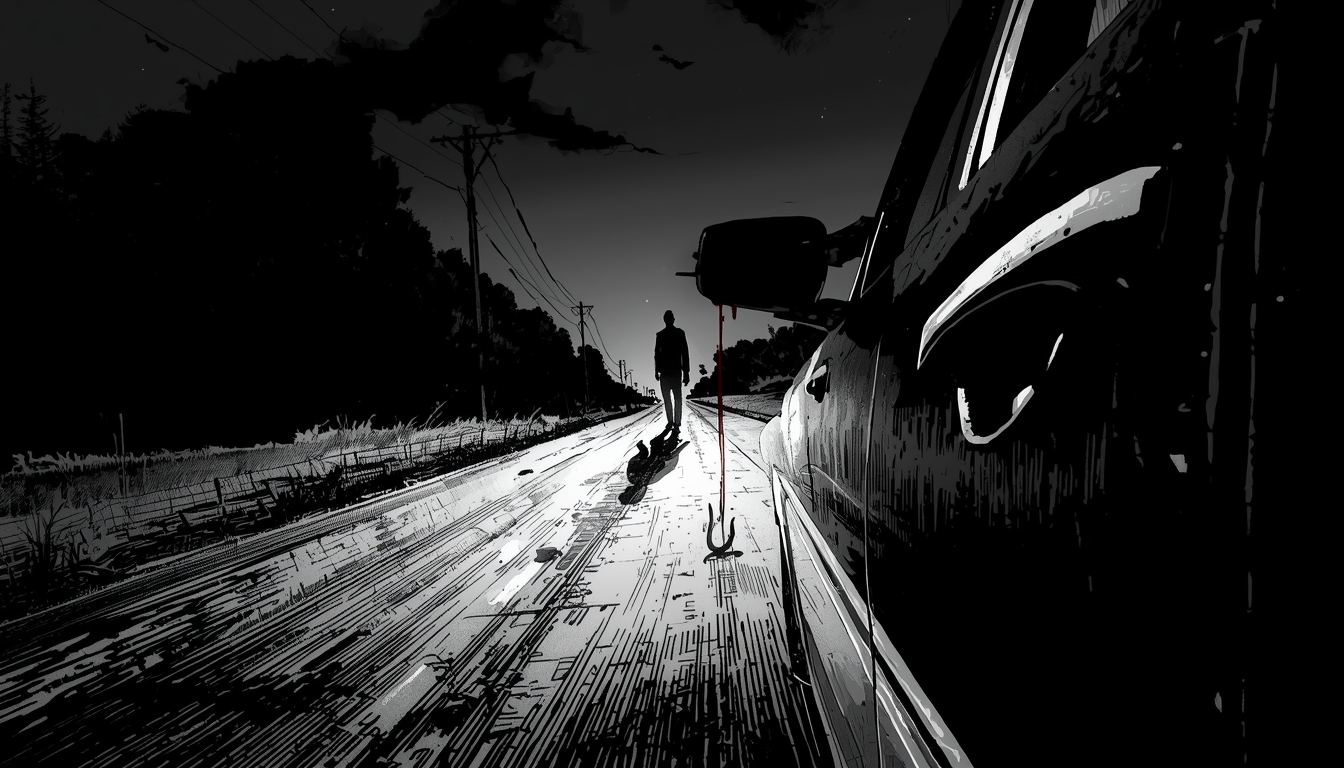
- The hook. A couple parks on a lonely road. The radio announces an escaped man with a hook for a hand. They drive off in a panic, and a hook is found hanging from the car door.
- The vanishing hitchhiker. A driver picks up a passenger on a country road, who disappears from the back seat. The address given turns out to be that of someone dead.
- The babysitter and the call from upstairs. A sitter takes threatening calls. The police trace them: they are coming from inside the house.
We do not quote Alvin Schwartz's Scary Stories to Tell in the Dark, which retells legends like these, because his text is under copyright. The legends themselves belong to everybody.
Why they frighten
Each one is a rule in disguise: do not park in the dark, do not pick up strangers, do not stay alone. They hand an anxiety a shape and a victim to blame, and they spread because the shape is easy to carry.
The legend changes with the fear. A famous one is the Halloween poisoner. Sociologist Joel Best traced the cases and found no stranger who killed a child with tampered treats. The one real death, in 1974, was a poisoning by the boy's own father, who used the legend as cover. Our essay has the full account: Nobody poisoned the candy.
The babysitter legend gets a twist from the data. The call really did come from inside the house, more often than we like to admit: the person most likely to hurt you is someone you know. That is the argument of The call is not coming from inside the house.
On screen
- When a Stranger Calls (1979): the babysitter and the calls, as a film.
- Black Christmas (1974): obscene calls, traced to inside the house.
- Urban Legend (1998): a slasher whose killer stages famous legends as murders.
- Urban Legends: Bloody Mary (2005): the mirror legend.
- Candyman (1992): a mirror-summoned killer, in the same line as Bloody Mary. Our review.
Sources
- Jan Harold Brunvand, The Vanishing Hitchhiker: American Urban Legends and Their Meanings (W.W. Norton, 1981)
- Urban legend, Wikipedia
- Nobody poisoned the candy, HorrorMoviesList.com (on Joel Best's research)